











![[Add-on] Jackery Manual Transfer Switch for Explorer 5000 Plus](http://ca.jackery.com/cdn/shop/files/add-on-jackery-manual-transfer-switch-for-5000-plus-240V.webp?v=1757043692&width=170)










Canadian summers can be deceptively intense. From the humid heat waves of Southern Ontario to the dry, scorching temperatures of the Okanagan Valley, keeping your RV cool is a priority. However, running an AC unit usually means loud gas generators or hunting for expensive campsites with shore power.
This leads many campers to ask: Can you use solar power for an RV air conditioner?
The short answer is yes. However, air conditioners are the single biggest energy consumer in an RV. Running one off-grid requires a robust system, realistic expectations regarding run-time, and the right equipment.
Can a Solar Generator Run an Air Conditioner?
Yes, but physics dictates the limits. Unlike lights or water pumps, an air conditioner requires massive amounts of energy.
A standard RV air conditioner does not run directly off solar panels. Instead, the panels charge a battery bank, and an inverter converts that stored DC battery power into AC household power to run the unit.
To do this successfully, you need a high-capacity system. Standard factory-installed RV solar setups (usually one or two panels) are insufficient. You need a high-output system designed specifically for heavy loads.
Understanding Power: Surge vs. Running Watts
To size your system, you must distinguish between the energy needed to start the AC and the energy needed to keep it running.
- Running Watts: A standard 13,500 BTU RV air conditioner typically consumes 1,500 to 1,800 watts continuously.
- Starting Watts (Surge): When the compressor kicks in, it requires a massive spike of power, known as Locked Rotor Amps (LRA). This surge can hit 3,500 to 4,000 watts for a split second.
If your inverter or generator cannot handle this 4,000W surge, the system will trip immediately, even if it could handle the continuous 1,500W load.
The Critical Upgrade: Soft Start Devices
If you plan to run an RV AC on solar, a Soft Start device is virtually mandatory.
A Soft Start is a small module installed on your AC unit. It manages the inrush of current, reducing startup demand by 50% to 70%. This brings the surge down from ~3,500W to a manageable ~1,500W–1,700W. This upgrade allows portable solar generators and smaller inverters to run the AC without tripping.
Essential Components for a Solar AC System
Building a DIY system capable of running AC requires three main components.
1. High-Capacity Battery Bank (LiFePO4)
Lead-acid batteries are too heavy and inefficient for this task. You need Lithium Iron Phosphate (LiFePO4) batteries. They can be discharged nearly 100% without damage and offer higher energy density.
- Minimum: 400Ah for short cooling bursts (1-2 hours).
- Recommended: 600Ah–800Ah+ for extended daily use.
2. Pure Sine Wave Inverter
Your AC compressor motor is sensitive. You must use a Pure Sine Wave inverter. Modified sine wave inverters can cause the motor to overheat and fail.
-
Sizing: Minimum 3,000W continuous output is recommended to handle the AC plus other background loads like your fridge.
3. Solar Panel Array (The Charge Source)
In Canada, we average fewer peak sun hours than the southern US—typically 3.5 to 5 hours depending on the season and province.
- Requirement: You need at least 1,000W to 1,500W of solar input to replenish the energy an AC unit consumes in just a few hours.
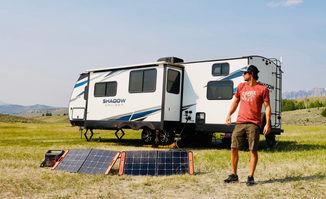
- Constraint: Most RV roofs cannot fit this many panels. Portable ground panels are often necessary to supplement roof arrays.
Solar Powered AC vs. Solar Generator for AC
There are two ways to approach this: installing a custom system or using a portable solar generator.
Custom Solar AC Install:
- Pros: Integrated into the RV, seamless operation.
- Cons: Expensive ($5,000–$10,000+ CAD), complex wiring, requires permanent roof modification.
Solar Generator for AC:
- Pros: Plug-and-play, portable, no installation costs, can be used for home backup during winter.
- Cons: Limited by the unit's battery capacity (though expandable models solve this).
|
Feature |
Custom DC/AC Solar Install |
Portable Solar Generator |
|---|---|---|
|
Installation |
Complex, requires professional wiring |
None (Plug & Play) |
|
Portability |
Fixed to the vehicle |
Portable (Move between RV and Home) |
|
Cost |
High initial investment |
Scalable investment |
|
Maintenance |
Requires system monitoring |
Zero maintenance |
|
Versatility |
RV use only |
Multi-purpose (Camping, Home, Work) |
Best Solar Generators for RV Air Conditioners
If you prefer a portable solution over a complex wiring project, Jackery offers high-capacity units specifically designed to handle heavy appliances like air conditioners.
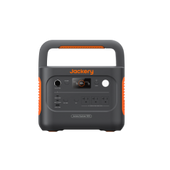
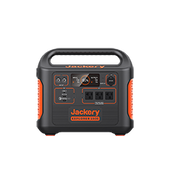
Jackery Solar Generator HomePower 3600 Plus
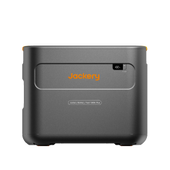
This is the powerhouse solution for RVers who want to run a 13,500 BTU AC unit. With a massive 3.6kWh capacity and high power output, it can handle the startup surge of standard RV air conditioners without issue.
- Capacity: 3584Wh (Expandable).
- AC Output: 3600W Continuous (7200W Surge).
- Best For: Running rooftop RV air conditioners, extended off-grid stays, and serving as a home backup system.
- Expandability: If 3584Wh isn't enough, you can add battery packs to increase runtime significantly.

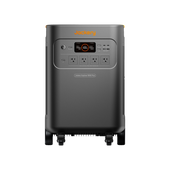
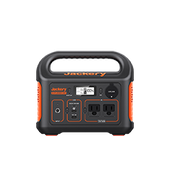
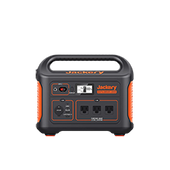
Jackery Solar Generator HomePower 3000
For those with smaller cooling needs or high-efficiency portable AC units, the Jackery Solar Generator HomePower 3000 provides a balance of power and portability.
- Capacity: 3072Wh.
- AC Output: 3600W Continuous (7200W Surge).
- Best For: Portable AC units, window units, or short run-times for rooftop units (e.g., cooling the RV during a lunch stop).
- Charging: Fast solar charging capabilities allow you to replenish the battery while parked.
How Many Watts Does An Air Conditioner Use?
Understanding your specific unit is key to calculating runtime.
|
Size of AC Unit |
Running Watts (Approx.) |
Surge Watts (Without Soft Start) |
|---|---|---|
|
Small Portable / Window Unit (5,000 BTU) |
500W |
1,000W |
|
Medium Window Unit (8,000 BTU) |
800W - 1,000W |
1,800W |
|
RV Rooftop Unit (13,500 BTU) |
1,500W |
3,000W - 3,500W |
|
Large RV Unit (15,000 BTU) |
1,700W - 2,000W |
3,500W - 4,000W |
Note: Air conditioners cycle on and off. A unit might run for 15-20 minutes per hour once the target temperature is reached, drastically reducing total energy consumption.
Calculating Runtime for Your RV
To calculate the runtime more accurately, please visit the Jackery Solar Generator HomePower 3600 Plus page here. Look for the 'Estimate Runtime' section, where you can input your appliance's wattage to see the estimated duration.
Efficiency Hacks for Canadian Summers
You can double your battery runtime by reducing the heat load on your RV:
- Park in the Shade: This makes a massive difference. Use portable solar panels (like Jackery Solar Panels) on extension cords to reach the sun while your RV stays cool.
- Insulate: Use Reflectix in your windows to block solar heat gain.
- Pre-Cool: Use shore power or the engine AC to cool the RV before you switch to solar/battery power.
- Use Fans: Roof vents (like MaxxAir) use only 20-30 watts and can exhaust hot air, allowing you to run the AC less frequently.
Final Thoughts
Running an RV air conditioner on solar power is no longer a myth—it is a reality for prepared campers. Whether you choose a custom roof install or a powerful portable solution like the Jackery Solar Generator HomePower 3600 Plus, the key is understanding your power needs.
Start with a Soft Start device, maximize your battery capacity, and use efficiency hacks to keep your Canadian summer adventures cool and quiet.
Frequently Asked Questions
Can I run my RV AC all night on solar?
Generally, no, unless you have a massive battery bank (10kWh+). A standard setup will deplete the batteries in 3-5 hours. Solar is best used for cooling down the RV before bed or during peak afternoon heat.
Do I need a Soft Start if I have a large solar generator?
While the Jackery Solar Generator HomePower 3600 Plus can handle the surge, installing a Soft Start is still recommended. It reduces the stress on the inverter and leaves more overhead power for other appliances.
Is it worth the cost?
If you boondock frequently in hot regions, yes. The silence and freedom of running AC without a gas generator are unmatched. For occasional users, a portable solar generator offers better value because it can be used for other purposes (home backup, camping) when not in the RV.


