

13 min · May 28, 2026
How Jim and Martha Martell built an off-grid family life powered by patience, wilderness, and the slow evolution of energy.
Long before lithium batteries and foldable solar panels arrived in the woods, Jim Martell’s cabins ran on older rhythms: candles, oil lamps, flashlights tucked into drawers, and woodstoves crackling through cold Canadian nights.
The first cabin, built on rural land in Ontario, was never meant to impress anyone. It was small, quiet, and practical. A place shaped more by trails and trees than by architecture. Jim and his wife, Martha, had spent years raising children and working full schedules, using the property mostly for walks, small escapes, and weekends outdoors.
“We made trails and walked around the property,” they said.
As their children grew older and left home, the land began to take on a different meaning. They built a small cabin. Wired it for a generator they rarely used. Learned to live with less electricity because, at the time, there was no elegant alternative.
And in some ways, that limitation was part of the appeal.
The silence mattered.
In those years, off-grid life required constant negotiation.
Winter nights arrived early in Ontario. Reading became difficult under weak lamps. Fine crafts and hobbies had to wait for daylight. Batteries froze. Lead-acid systems demanded maintenance. Wires multiplied around charging posts in ways that always felt temporary, improvised, unfinished.
“It was harder to do simple things,” they explained.
At the family’s British Columbia cabins, where they would eventually spend months at a time, the situation was even more complicated. The cabins were fully off-grid by choice. No utility bills. No dependence on infrastructure. No pressure to maintain a second traditional home.
“It becomes a family place,” they told us. “Free of stress, full of fun and memories.”
But creating that simplicity required work.
Water pumps needed monitoring. Solar controllers had to be disconnected before the winter freeze. Batteries failed and needed replacing. Every improvement demanded another layer of management.
Off-grid life offered freedom, but only to people willing to adapt to its demands.
They are not the kind of people who romanticize hardship.
Jim and Martha like practical systems. Useful systems. Systems that improve daily life without making it more complicated.
So when rechargeable lighting, USB-powered devices, and portable solar systems started appearing more widely around 2019, they paid attention. Like many off-grid enthusiasts, they spent evenings watching YouTube videos from people living remotely: cabins, vans, trailers, solar setups scattered across forests and deserts.
One product kept appearing: Jackery.
What attracted him first wasn’t capacity or branding. It was simplicity.
“Plug and play,” they said. “Everything was right there.”
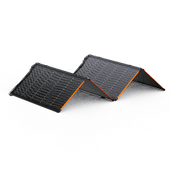
No complicated wiring. No permanent installations. No sprawling systems requiring constant adjustments. Just unfold a panel, place it in the sun, and return later to a charged battery.
For people who had spent years improvising around older technology, that mattered.
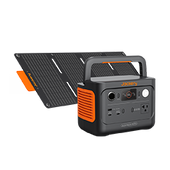
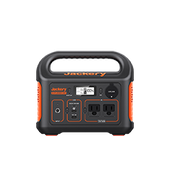
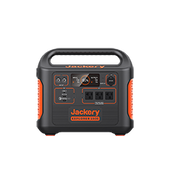
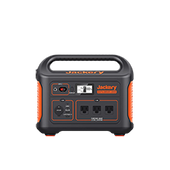
The first unit was the Explorer 500. At the Ontario cabin, it powered exactly the kind of things the family had once struggled to manage: rechargeable headlamps, phones, LED lights, and small electronics. The discharge across an entire season was so minimal that recharging became almost incidental.
“We’ve never even brought that one home,” they explained.
The unit remained at the cabin year-round through hot summers and freezing winters, waiting quietly for the next season to begin. That reliability changed something fundamental.
Off-grid life no longer felt like a constant compromise; it began to feel sustainable.
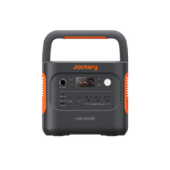
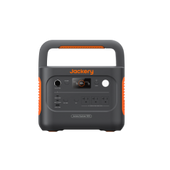
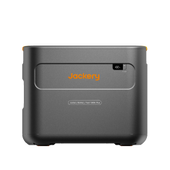
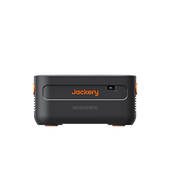
The progression happened gradually: an Explorer 1500, then a 2000, and eventually the Explorer 5000.
Each addition reflected not excess, but evolution. Both in the technology itself and in the family’s understanding of what they actually needed.
The sleeping cabin in British Columbia first used the Explorer 500 for a breathing machine, phones, and Bluetooth speakers. Later, the 1500 supported lighting systems and charging needs. Eventually, the larger cabins incorporated refrigerators, water pumps, and more permanent electrical infrastructure powered through Jackery systems.
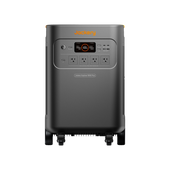
Reading a Jackery Explorer 5000 review, many people focus on capacity, how much it can run, and how long it lasts.
Jim and Martha see something else: freedom from complexity.
“With the 5000, we need no other power source,” they said.
The transformation wasn’t dramatic all at once; it happened in layers: better lighting first, then refrigeration, water systems, and then the small comforts that quietly reshape everyday life.
At night, the cabins no longer disappeared into darkness after sunset. The family could read comfortably. Listen to music. Do crafts. Stay connected online without driving into town to find internet access.
“Our lighting made the cabin more like home,” they said. And yet, importantly, not too much like home.
There are still no electric cooking appliances. No oversized entertainment systems. No attempt to recreate suburban life in the woods. The cabins remain intentionally simple: propane stoves, wood heat, quiet mornings.
That balance matters to them.
“We want to keep life there very simple,” they said. “That’s why we’re at a cabin and not a house.”
Living off-grid in Canada means understanding that energy changes with the seasons.
In spring, refrigeration matters less than lighting and tools. Chainsaws, drills, and trimmers become part of reopening the property after winter. As summer arrives, solar production increases, refrigerators run continuously, and e-bike batteries join the charging rotation.
Then autumn reverses everything again.
Coolers replace refrigerators. Daylight shrinks. Lighting becomes more important than cooling.
Over time, they learned to think of power not as something unlimited, but as something seasonal and responsive.
“You learn what appliances are efficient,” they told us. “You learn what matters.”
Monitoring wattage became less a technical exercise and more a way of understanding the rhythms of the cabins themselves.
One winter, contractors arrived at the Ontario cabin to rebuild part of the roof. They brought air nailers and planned to run a loud gas generator all day.
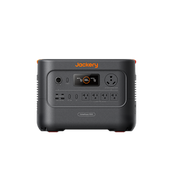
Jim suggested something else: the Jackery 2000. After an entire day of work, the unit had only dropped twenty percent.
What stayed with him wasn’t just the performance, it was the quiet.
No engine noise echoing through snow-covered woods. No fumes. No interruption to the stillness that had drawn them there in the first place.
Eventually, the systems became part of daily life outside the cabins, too.
Back home, winter outages in Ontario can quickly leave houses cold and dark. The furnace stops. Lights disappear.
Now, during outages, they plug the basement propane heater into the Jackery system so the fan continues running normally. Lamps stay on. Tablets remain charged. Evenings continue almost unchanged.
“We pretend we’re at the cabin,” they said.
It’s less a backup system than an extension of the lifestyle they already know how to live.
They are already planning the next phase: a permanent high-voltage solar array designed to support the Explorer 5000 almost entirely through solar generation. Six to eight panels. Enough capacity to eliminate the generator except as an emergency backup.
But even as the technology evolves, their goal remains surprisingly modest: not more things and not more consumption, just better systems.
At the end of the interview, they describe their Jackery experience in three words:
“Calm. Comfortable. Complete.”
It sounds less like a review than a philosophy.
Because after years of building cabins, raising families, adapting to older technologies, and waiting for better ones to arrive, what Jim and Martha found wasn’t simply portable power.
It was a way to let the wilderness stay quiet, while still making room for light.