

Jackery Stories / Power Between the Cuts
Explorer 3000 Pro Lighting Technician

Power Between the Cuts

9 min · May 14, 2026

Image

How a lighting technician rewrote what’s possible on a moving film set

Where Everything Depends on the Next Shot

On a film set, nothing stands still for long. Cameras move. Actors shift positions. Light changes by the minute. And somewhere behind it all, there is a quiet, constant demand: power must follow everything.

Todd Lapp has spent thirty years working inside that moving system. As a head lighting technician in film and television, his job is not just to create light, it is to make sure it exists exactly where it is needed, at exactly the right moment, without delay.  

“Everything we do depends on it,” he says.

If a light fails, a scene stops. If a monitor goes dark, decisions stall. And when a production involves hundreds of people, delays are not minor inconveniences; they are costly, immediate, and visible.

For most of his career, solving that problem meant cables. Heavy, sprawling networks of them, running across streets, through buildings, around obstacles. Or generators, large, loud, and fixed in place.

It worked. But it was never elegant.

The Weight of Traditional Power

To understand what changed, you have to understand how things used to be.

Power on the set was centralized. You brought it in, distributed it outward, and hoped it reached everywhere it needed to go without getting in the way. In controlled environments, that system held.

But film sets are rarely controlled.

They move into forests, across neighborhoods, into private homes, onto streets where nothing can be disturbed. They involve stunt sequences, tracking shots, and unpredictable camera movements.

“You don’t always have the luxury of plugging in,” Todd says.

And even when you do, cables come with their own problems: trip hazards, setup time, and visual limitations. In high-end locations, they become something else entirely: an intrusion.

“You’re trying to respect the space,” he explains. “Don't take it over.”

So the industry adapted. It experimented. Built custom battery rigs and improvised with equipment never designed for that purpose. It was functional, but it was never simple.

A Search for Something Smaller

The shift didn’t begin with a grand decision; it began with a need.

Todd and his team were already experimenting with battery systems; large, industrial units capable of powering entire sections of a set. But those systems came with their own constraints: weight, scale, and limited mobility.

What they needed was something different: smaller, faster, and easier to deploy. Something that could move with the scene. “We wanted something handheld,” he says.  

That search led him online, where he compared options, checked availability, and looked for something that could meet the demands of a professional environment without adding complexity.

That’s when he found Jackery. Not as a replacement for everything, but as a solution for something very specific.

  • Image

The First Use Case

At first, the applications were simple.

Powering monitors. Charging devices. Supporting small control systems when the main power wasn’t available. But on a film set, nothing stays small for long. Because once a tool proves useful, it gets pushed further.

And further.

A Different Kind of Review

In a typical Jackery Explorer 3000 Pro review, you might read about output capacity, battery life, or portability.

Todd talks about movement. “The biggest thing is mobility,” he says.

Not having to plan every cable route. Not having to build power infrastructure before a scene can begin. Not having to stop and reconfigure when the camera shifts direction.

Instead, the system moves with the production.

You place it where you need it. Use it. Pick it up. Move on.

And in an industry where time is measured in minutes, and sometimes seconds, that difference matters.

  • Image

When Power Starts Moving With the Scene

The real shift came during more complex shoots: A stunt sequence, a specially built vehicle, and cameras mounted in motion.

The kind of setup that, in the past, would have required extensive planning, custom rigs, and a network of solutions working together. Instead, they did something simpler: they secured a Jackery unit inside the vehicle.

“That’s how we powered everything,” Todd explains. 

Lights. Audio systems. Communication tools. All running independently, without cables trailing behind, without external dependencies.

In another setup, a camera car followed behind, powered by a separate unit. allowing real-time communication between vehicles, live adjustments, and full mobility.

What once required careful choreography became something more fluid.

The Quiet Advantage

There is another detail, less technical but just as important: silence.

Traditional generators are not subtle. They hum, vibrate, announce their presence in every take.

Battery systems don’t. “It’s quiet,” Todd says.

And in filmmaking, silence is not just a convenience; it is a necessity. It allows for cleaner audio, fewer interruptions, and more flexibility in how scenes are captured.

It changes not just how power is delivered, but how the entire environment feels.

Building a System, Not Just Using One

Over time, Todd’s setup expanded.

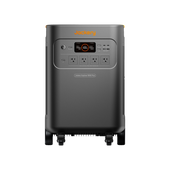
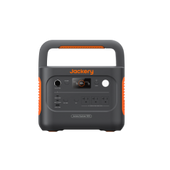
An Explorer 3000 Pro for greater demands.
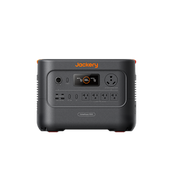
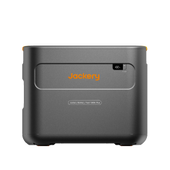
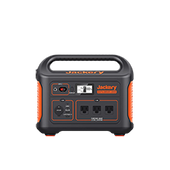
An Explorer 2000 for mid-range applications.
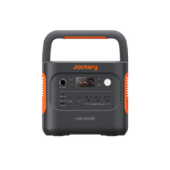
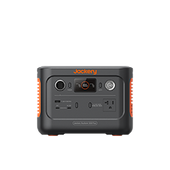
An Explorer 1500 for flexibility.
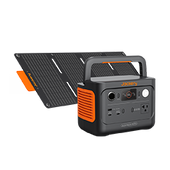
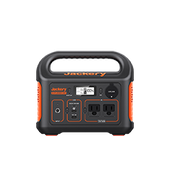
Multiple smaller units, Explorer 240s, are distributed across the set.  

Each serves a purpose. Each fills a gap.

And together, they form something larger: a modular system that adapts to whatever the production requires. “You always need more,” he says, half-joking.

But it’s true. Because on a film set, demand is never static.

  • Image

The Unexpected Impact

What started as a technical solution has begun to influence something broader.

How sets are designed, how locations are chosen, and how productions think about sustainability.

There is now pressure, both internal and external, to reduce environmental impact. To minimize noise. To limit disruption. Battery-powered systems play a role in that shift. “We’re trying to hit 60% sustainable power,” Todd explains.  

In some cases, his team reaches even higher, not by replacing everything, but by rethinking what is necessary and what isn’t.

A New Standard in Motion

The effect is subtle at first: fewer cables, less setup time, and more flexibility.

But over time, those changes accumulate: they allow for different kinds of shots, movements, and storytelling.

Directors can think more freely. Crews can respond more quickly. And what once felt like a limitation begins to feel like an advantage.

What Stays Behind the Scenes

At the end of the day, most viewers will never notice any of this.

They will see the finished scene: the lighting, the movement, the performance. Not the system that made it possible. 

But for Todd, that’s the point. Power, when it works correctly, disappears; it becomes part of the background.

Reliable. Available. Unnoticed.

And in an industry built on illusion, that might be the most important role it can play.

Because sometimes the most significant change is not what you see on screen, it’s everything that no longer gets in the way of making it.

Shop Products From This Article

42% OFF
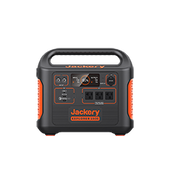
Jackery Explorer 3000 Pro Portable Power Station

Explorer 3000 Pro

3024Wh Capacity | 3000W Output
$2,299$3,999
Shop Now
44% OFF
Jackery Explorer 2000 Plus Portable Power Station

Jackery Explorer 2000 Plus

2042Wh Capacity | LiFePO4 Battery
$1,599$2,899
Shop Now

See More Stories

  • Image
    Los Angeles is a system perpetually under strain—from wildfires, blackouts, and heatwaves to subterranean earthquakes. For someone like John, conditioned to think in terms of failure points, energy reliability is concrete-HomePower 3000,Explorer 1000,SolarSaga 200W.
  • Image
    Jackery powers a Florida firefighter Kyle’s home through hurricanes, keeping his family safe with quiet, reliable backup energy—so he can focus on saving others-Explorer 5000 Plus, SolarSaga 500 X, Smart Transfer Switch.
  • Image
    Joe Sener is a private pilot and a retired engineer with a deep-rooted love for aviation. He has been in the aviation industry for the last 20 years and has undertaken many flying trips-Solar Generator 300, Explorer 300, SolarSaga 100W.

Our Recommendation

40% OFF
Jackery Solar Generator  HomePower 3600 Plus

HomePower 3600 Plus + SolarSaga 340 X

3584Wh Capacity | 3600W Output
$2,899$4,899
Shop Now
54% OFF
Jackery Solar Generator 2000 v2

Explorer 2000 v2 + SolarSaga 100W x 2

2042Wh Capacity | Emergency Charge 1.7 Hrs
$1,499$3,279
Shop Now
28% OFF
Jackery Explorer 600 v2 Portable Power Station

Jackery Explorer 600 v2 Portable Power Station

640Wh Capacity | 500W Output
$499$699
Shop Now
Jackery Explorer 240 v2 Portable Power Station

Explorer 240 v2

256Wh Capacity | 300W Output
Leave a comment
*
*
Please note, comments must be approved before they are published
This site is protected by hCaptcha and the hCaptcha Privacy Policy and Terms of Service apply.
Post comment
Comment