

13 min · Jul 7, 2026
How Omar Kanama turned portable solar power into a quieter, cleaner way to cultivate life
Plants reveal everything eventually.
Too much heat, and leaves curl inward. Too little airflow, and moisture lingers where it shouldn’t. Light imbalance stretches stems thin. Timing matters. Temperature matters. Humidity matters. Every small inconsistency leaves a trace somewhere in the growing environment.
Omar Kanama learned this early.
As a greenhouse technician, his work has always revolved around controlled environments, spaces where growth depends not on luck, but on careful systems operating together. Ventilation. Irrigation. Lighting. Air movement. Energy.
Outside, he works primarily in landscaping and horticulture. But indoors, where plants depend entirely on what humans create for them, the relationship becomes more precise. More technical.
“You’re responsible for the whole environment,” he says.
And eventually, that responsibility led him toward a different question: not just how to grow plants well, but how to power the process differently.
Before solar power entered his life, Omar approached energy the way most growers do—as a necessary cost attached to cultivation. Lights consume electricity. Fans consume electricity. Filters, pumps, circulation systems. All of it adds up.
And indoors, unlike outdoor growing, there is no natural fallback.
If the systems stop, growth stops too.
That reality became more visible as Omar spent more time working across different environments. He began noticing how much fossil fuel dependency sat quietly behind everyday horticulture. Not dramatic pollution. Not smokestacks. Just constant consumption: steady, normalized, unquestioned.
“Energy use was the main concern,” he says.
Not only financially. Environmentally too. The contradiction bothered him.
Growing plants, something inherently connected to life and sustainability, still depended heavily on systems producing emissions elsewhere. Over time, that disconnect became difficult to ignore.
“It gradually became more important to gain sustainability,” he explains.
The first encounter with Jackery was unremarkable in the way many meaningful changes begin.
An advertisement online. Then another.
Eventually, curiosity took over. Omar started researching portable solar systems, comparing what existed, trying to understand whether any of it could realistically support an active indoor growing setup.
Most systems felt overly technical or inaccessible. Complicated installations. Specialized knowledge. Too many barriers between interest and actual use. Then he found Jackery.
“It was the first of its type that was so easy to use,” he says. That simplicity mattered.
For Omar, technology only works if it integrates naturally into daily life. If every adjustment becomes a project, the system stops serving the work and starts becoming the work itself.
Jackery felt different immediately.
Plug-and-play. Portable. Flexible.
A system designed not only for experts, but for people actively building something.
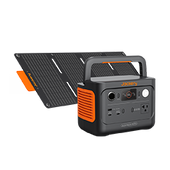
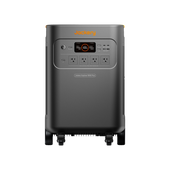
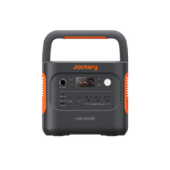
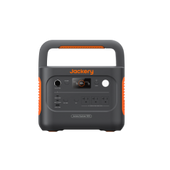
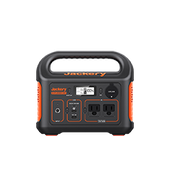
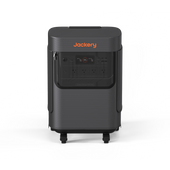
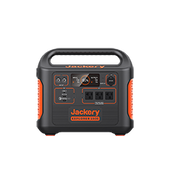
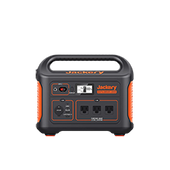
Omar began with two units: the Explorer 3000 Pro and the smaller Explorer 500.
The goal wasn’t to abandon traditional electricity overnight. It was to create a cleaner, more adaptable system that could support essential growing equipment while reducing reliance on conventional power sources.
Lighting became one of the priorities.
Indoor growing depends heavily on consistency, light schedules timed precisely to support healthy development. Fans and filtration systems followed, maintaining airflow and environmental stability. Together, they formed the core systems necessary for cultivation.
Reading a Jackery Explorer 3000 Pro review, many users focus on capacity and runtime. Omar noticed something else first: flexibility.
“I can interchange systems if needed,” he says.
The Explorer 3000 Pro handled greater demand,s while the Explorer 500 supported smaller devices and backup functions. The systems could shift depending on what the environment required.
That adaptability changed how he approached the entire space.
One of the first differences Omar noticed had nothing to do with output, it was the atmosphere.
Traditional generators announce themselves constantly: noise, vibration, fumes lingering around the edges of the workspace. Even standard electrical systems carry an invisible heaviness: dependence on something external, industrial, distant from the environment you are trying to create.
The Jackery systems changed the feeling of the room itself.
Quiet fans moved air steadily. Grow lights hummed softly overhead. The entire setup operated without interruption or mechanical aggression.
“It changes my mood toward my hobby,” Omar says.
That sentence lingers because it speaks to something larger than convenience.
When the environment becomes calmer, the work changes too. Observation becomes easier. Focus sharpens. The space feels less like a technical setup and more like an ecosystem being carefully
As the system expanded, Omar became increasingly aware of energy itself, not just as a utility, but as something measurable and manageable.
He began paying closer attention to consumption patterns. Which lights performed efficiently? Which devices drew unnecessary power? Which systems could be improved?
The process became almost experimental.
“What surprised me,” he says, “was how durable everything was.”
Durability matters in horticulture. Growing environments are rarely gentle places. Moisture, dirt, constant movement, changing temperatures, equipment is tested daily.
The Jackery systems adapted without issue.
And gradually, Omar’s setup stopped feeling temporary. It became foundational.
As more people saw the setup, conversations started happening naturally.
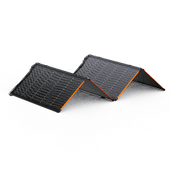
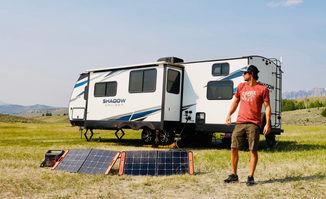
Other growers asked questions. Friends noticed the solar panels and portable stations. People working in agriculture and horticulture recognized the practicality immediately.
“Farmers should own one of these products,” Omar says bluntly.
Not because solar power is trendy, because the industry itself is changing.
More growers are thinking about sustainability. More operations are looking for ways to reduce dependence on fuel-heavy systems. Portable solar energy no longer feels experimental, it feels inevitable.
Omar sees that shift coming clearly, and he believes smaller-scale growers may lead it first.
Looking ahead, Omar plans to continue expanding.
Not necessarily toward larger complexity, but toward greater integration. More efficient systems. More sustainable infrastructure. Better ways to combine portability with long-term reliability.
He already trusts the direction Jackery is moving. “Jackery will be my brand forever,” he says.
There are still improvements he hopes to see, more waterproof models, additional durability for outdoor conditions, but the foundation already exists.
A system capable of supporting cultivation without depending entirely on conventional infrastructure.
A way to grow differently.
At the end of the conversation, Omar offers an unusual phrase when asked what Jackery means to him.
“Jackery means to jack up the moment within,” he says.
Beneath the technical language of batteries and solar panels is something deeply human: the desire to align what we build with what we value.
For Omar, sustainability is no longer an abstract concept discussed in policy or advertising.
It is a daily practice: Light by light, fan by fan, plant by plant.
And somewhere inside that quiet indoor garden, powered by stored sunlight, a different version of modern growing is already taking shape.
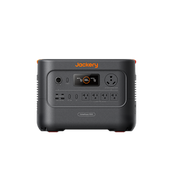
Notice:The Jackery Explorer 3000 Pro and Explorer 500 are currently sold out on the CA official website. For a similar experience with improved performance and updated features, explore the Jackery HomePower 3000, HomePower 3600 Plus, or Explorer 1000 v2.