
13 min · Jul 16, 2026
From megawatt turbines to the quiet logic of portable power
In Sebastien Bouffard’s world, failure is not abstract.
It is immediate. Measurable. Expensive.
For over two decades, he has worked as a mechanical engineer in gas turbine power generation, producing between 34 and 66 megawatts of energy. Systems designed for one purpose: to work, every time, without exception.
“When they don’t,” he says, “everything stops.”
Data centers go dark. Infrastructure halts. Entire operations depend on the assumption that power will be there when needed; not later, not eventually, but instantly.
This is the standard Sébastien has internalized: availability, reliability, readiness.
So when the lights flicker at home, just a few hours a year, nothing dramatic, it still feels like a system falling short.
“I want it to work the same way,” he says. “At home, too.”
The first shift didn’t happen in his house; it happened in the woods.
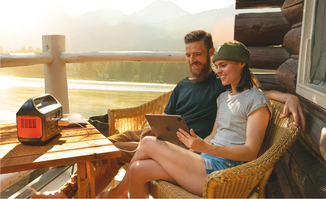
On a plot of land outside Montreal, Sebastien built a small cabin: simple, remote, surrounded by trees. The kind of place people go to disconnect.
At first, he brought a gas generator. “It works,” he says. “But it doesn’t belong there.”
The noise cut through the silence. The smell lingered. Every moment of stillness came with a mechanical interruption.
“It wasn’t the experience I wanted.” So he started looking for something else.
Not just power, but power that could exist without disturbing the environment around it.
For someone who works with massive energy systems, the idea of scaling down is not trivial.
Sébastien approached it the same way he would approach any engineering decision: compare specifications, evaluate performance, test assumptions.
He looked at multiple brands. Studied inverter capacity. Compared output ratios. And eventually, one option stood out.
“It was the balance,” he explains. “Power, flexibility, expandability.”
A friend already owned a smaller unit. That helped. But what convinced him was something more precise, the ability to run demanding equipment without compromise.
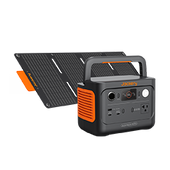
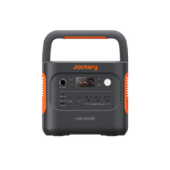
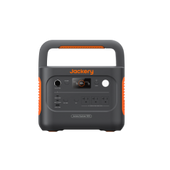
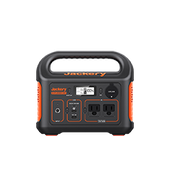
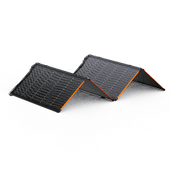
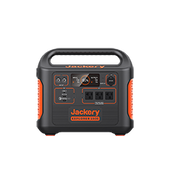
That’s how he began. Not with a full system, just a Solar Generator 1000 Plus and two solar panels.
At first, it worked exactly as expected: charging tools, powering lights, and supporting small needs at the cabin. But then came the test every system eventually faces: time.
Three days of rain. “No sun, no recharge,” he says, and suddenly, the system reached its limits.
For Sebastien, this wasn’t a failure; it was data.
He didn’t abandon the setup. He expanded it.
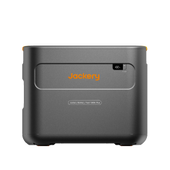
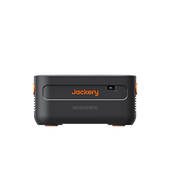
An extra battery pack. More capacity. More resilience. “I realized pretty quickly,” he says, “if you’re going to rely on it, you need margin.”
What followed wasn’t a single upgrade; it was a shift in philosophy. Instead of one unit doing everything, Sebastien built a modular system.
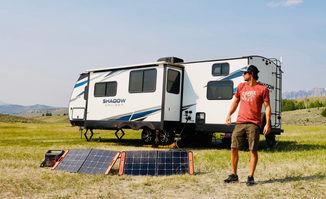
Solar panels are placed strategically to maximize exposure throughout the day. Additional panels were added not just for power, but for consistency.
“I wanted flexibility,” he says. “To adapt depending on the situation.”At the cabin, that meant independence from fuel. At home, it meant readiness.
Reading a Jackery Solar Generator 1000 Plus review, you might expect a checklist of features.
Sebastien’s evaluation is different; he talks about systems.
“The inverter matters,” he says. “The flexibility matters. The expandability matters.”
Not as isolated features, but as part of a larger structure. The ability to scale capacity, to connect different outputs, and to switch between applications without redesigning everything.
“It’s not one use,” he explains. “It’s many.” That’s what makes it valuable.
Eventually, the system made its way home.
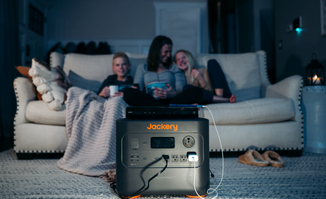
At first, as an experiment: plugging in essentials, testing runtime, and understanding behavior during outages.
In Montreal, power cuts are infrequent, but predictable enough to matter. A few hours here and there. Never catastrophic, but always inconvenient.
Now, Sebastien keeps part of his setup permanently connected.
Internet. Network. Core systems.
When the grid fails, the transition is immediate. “No interruption,” he says.
And for a hunter, one detail matters more than most: the freezer. Inside, stored game, months of effort, preparation, and time.
“That’s the first thing I think about,” he admits.
Not comfort, preservation.
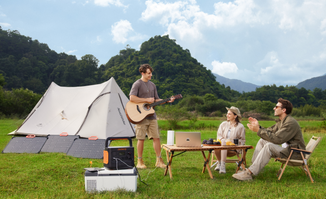
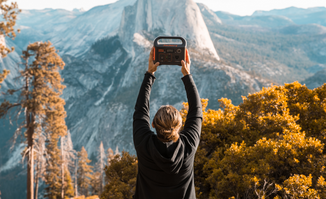
Outdoors, the difference is even more noticeable. When Sebastien and his friends go hunting, they bring the system with them. Not for luxury, but for essentials.
Lights, heated gloves, communication devices, and something else: silence.
“There’s no noise,” he says. “That’s the biggest thing.” No engine running in the background. No mechanical interruption.
Just energy, available, but invisible.
For someone who once relied on gas generators, the contrast is immediate.
“It changes the experience,” he says.
One of the most important realizations came from something simple: No single setup fits every scenario.
At the cabin, he needs endurance; out hunting, he needs portability; and at home, he needs reliability.
Instead of choosing one, Sebastien built a system that adapts. “That’s what I like the most,” he says. “All the options.”
Different panels. Different capacities. Different configurations.
Not fixed, flexible.
It doesn’t take long for people to notice. At the cabin, in the neighborhood, and on hunting trips.
Why is there no generator noise? How is everything still running? What is that setup?
“I’ve had people ask to try it,” he says.
One neighbor borrowed the system during an outage. After that, the questions changed.
Not curiosity, interest.
What makes Sebastien’s story different is not just how he uses the system, but how he thinks about it.
Even now, he’s planning the next step: an auxiliary panel at home. A more integrated backup system. Possibly larger capacity units in the future.
Not because something is missing, but because systems, in his world, are always evolving.
“You start small,” he says. “But then you understand what you really need.”
And that understanding leads somewhere else entirely.
At the end of the conversation, Sebastien is asked to describe his experience in three words.
“Flexibility. Portability. Efficiency.”
But there’s something else, harder to define, something he circles when he talks about the outdoors.
The absence of noise. The presence of energy. The ability to exist without disruption.
For someone who has spent his life ensuring that massive systems never fail, the shift is subtle, but profound.
Power no longer has to be loud to be reliable; it no longer has to dominate the environment to exist within it.
Sometimes, the most effective system is the one you barely notice at all, and for Sébastien Bouffard, that realization changed everything.
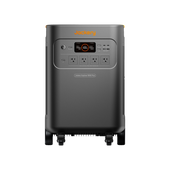
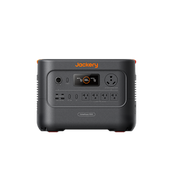
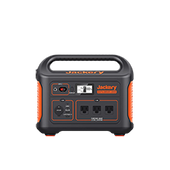
Note:The Jackery Solar Generator 1000 Plus is currently sold out on the CA official website. For a similar experience with improved performance and updated features, explore the Jackery Solar Generator 2000 Plus or Explorer 1000 v2.